

Big Texas and Mary Jane, A Strained Relationship
What Banks and High-Risk Businesses Should Know About Cannabis Laws After July 31, 2026.
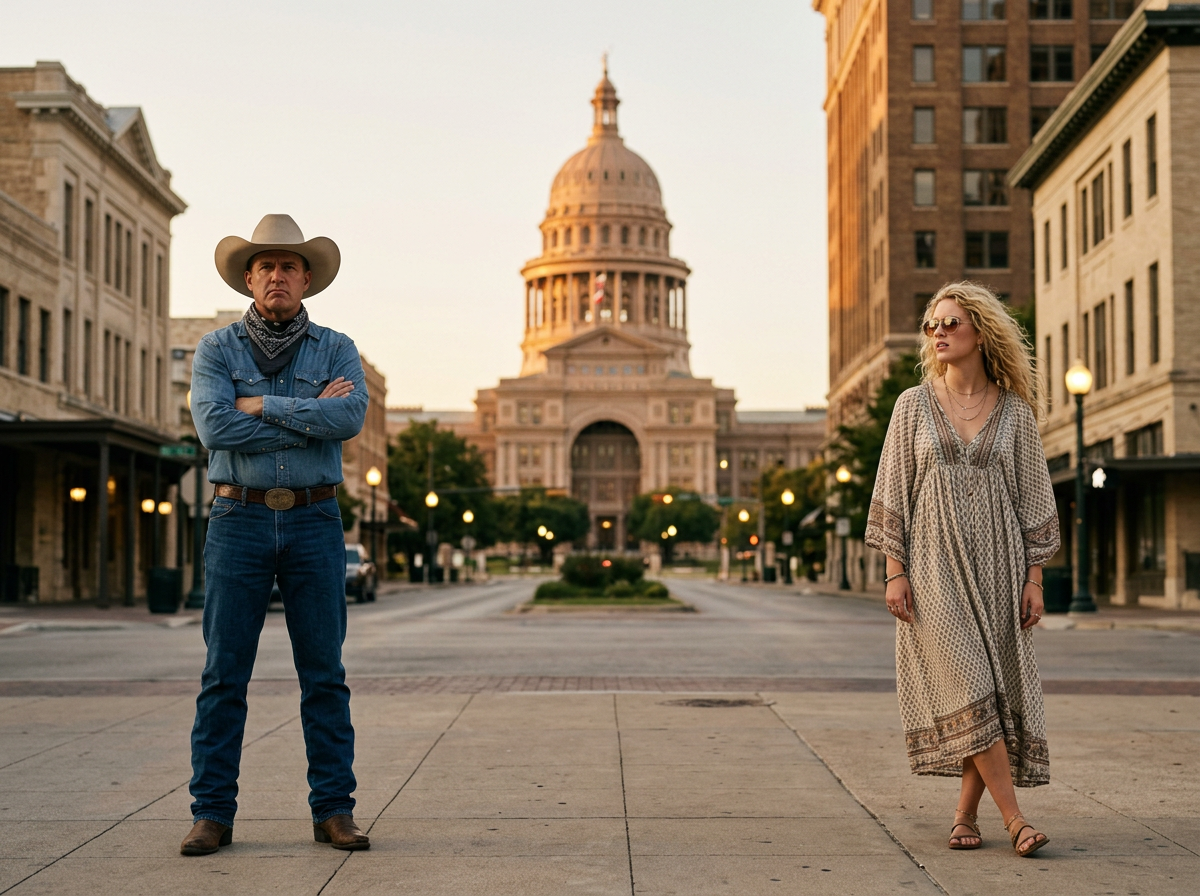
Illustration of a Texas cowboy figure and a relaxed blonde woman in sunglasses standing apart in front of the Austin Capitol, symbolizing tension between Texas cannabis law and the hemp industry after the July 31, 2026 THC ban.
Texas and hemp have had a complicated relationship for years, and as of July 31, 2026, it got a lot more strained. The state just made it illegal to sell delta-8, delta-10, THCP, and most other hemp-derived THC products. Only delta-9 THC, in small legal amounts, is still allowed.
If you're a bank, credit union, or a business that sells or touches these products, here's what actually changed, who's affected, and what to do about it.
A quick history, condensed
Back in 2019, Texas passed House Bill 1325, commonly called the Texas Farm Bill, legalizing hemp as a farm product. Retailers took that to mean products like delta-8 THC were fair game too, and a market grew around them. In 2021, the state's health department disagreed and tried to ban delta-8. A hemp retailer called Sky Marketing Corp (you may know their brand, Hometown Hero) sued, and a court blocked the ban while the case played out. That injunction held for almost five years.
On May 1, 2026, the Texas Supreme Court sided with the state. The health department reinstated its ban, and after the required waiting period, it took effect July 31, 2026.
Hemp or cannabis? Same plant, different label
Delta-8, delta-9, and delta-10 aren't different types of hemp versus cannabis. They're all THC compounds from the same plant, Cannabis sativa. There's no botanical line between "hemp" and "marijuana," only a legal one: hemp is cannabis with 0.3% or less delta-9 THC by dry weight, and anything over that is legally marijuana. That rule only ever measured delta-9, which is how delta-8 and delta-10 slipped through: they're barely present naturally, so most commercial products are synthesized from legal hemp-derived CBD and sold as "hemp" on a technicality. That's the gap Texas just closed, and it's the same gap the federal government is closing on November 12.
What's actually illegal now
As of July 31, delta-8, delta-10, THCP, and similar products are treated the same as any other illegal drug in Texas, with real criminal and licensing consequences for selling them. Delta-9 THC in small, federally legal amounts is still fine. Smokeable hemp (like flower and joints) is also still available for now, because a separate ban on that category is paused in a different lawsuit.
Can labs actually measure this accurately?
Fair question, and for years the honest answer was no. Early testing only checked delta-9 THC directly. THCA, the non-intoxicating compound that converts to delta-9 when heated, wasn't counted at all, which is exactly how THCA flower and delta-8 products got sold as "compliant hemp." In March 2026, DSHS moved to a Total THC testing standard that accounts for that conversion using validated lab methods, mainly HPLC. That's a more accurate approach, but it's currently paused by the same court order keeping smokeable hemp on shelves.
Lab capacity is still catching up. Many labs statewide don't yet have the validated methods or staffing to run this testing at scale, which has led courts to dismiss a number of cases for lack of provable evidence. In practical terms: a client telling you their product tests under 0.3% isn't necessarily wrong, but it's also not something you should take on faith. Ask for current certificates of analysis, and don't assume a verbal assurance means the number is reliably tested.
Who's actually at risk (it's not who you think)
Most banks already keep an eye on obvious cannabis businesses, dispensaries and the like. Those aren't the accounts to worry about right now. The bigger blind spot is the ordinary-looking businesses banks don't think twice about: gas stations, convenience stores, spas, even restaurants that sell hemp drinks or THC edibles. Any of these could be selling a now-illegal product without your bank ever having flagged the account.
One more thing worth knowing: the industry stopped using the term "MRB" (marijuana-related business) years ago in favor of "CRB" (cannabis-related business), because the customer base grew well past traditional marijuana companies. If your bank's policies still only talk about MRBs, you're probably missing accounts.
What to do about it
Ask your clients directly. Send updated questionnaires to accounts that might be affected, don't wait for the next scheduled review. Ask plainly: do you sell hemp, delta-8, delta-9, THC, or similar products, and what share of your revenue comes from them.
Don't take the answer at face value. Verify it where you can, through current lab-tested COAs, invoices, site visits, or vendor records.
Re-think how you've rated these accounts. A business that leaned heavily on now-illegal products doesn't belong in your "low-risk retail" bucket anymore.
Factor it into lending, too. If you're underwriting a loan, product mix and THC concentration should be part of that picture.
File the paperwork when it's warranted. Nothing about this ruling changes your normal reporting obligations. If what you find supports a suspicious activity report, file it.
If your bank gets asked about this during an exam, it's more likely to come up as a conversation with your BSA officer about how you responded, not as a formal citation out of the gate. Either way, having a clear record that you got ahead of it matters.
What this means for the market, honestly.
It's hard to put a precise number on how much shelf space or revenue this will cost the industry, and anyone who claims to know the exact figure is guessing. What's clearer is that enforcement now carries real teeth, with criminal exposure that can start at six months even for the smallest amounts. Texas has been here before: not long ago, students were being sent to alternative schools over hemp-adjacent products, often because of simple confusion over what was and wasn't legal. That same pattern is the real risk today, and it doesn't just apply to individuals. A small business that doesn't get ahead of this isn't just risking lost revenue. It's risking a fast, avoidable path from simple ignorance to criminal exposure, or fines that are difficult for a small operation to absorb.
One more deadline on the horizon.
This isn't the last change coming. On November 12, 2026, a separate federal law rewrites how the U.S. government defines hemp altogether, using a stricter standard that counts more types of THC. A product that survives Texas's rule by sticking to delta-9 could still get caught by the federal one a few months later. Treat these as two separate deadlines on the same accounts, not one event.
And a quick federal note for context: this Texas ruling doesn't touch the federal guidance banks rely on to bank cannabis businesses at all (the 2014 FinCEN guidance is still technically in place). That guidance has been on shaky ground since 2018, and federal marijuana policy has been shifting on its own timeline all year. Worth knowing, but not something this Texas ruling changes one way or the other.
You don't have to navigate this alone
If you're a bank, credit union, executive, senior manager, or a high-risk business trying to navigate this landscape, you're not alone. At Auson, we're happy to talk through what this means for you, whether that's updating policies and procedures, building out a compliance checklist, reviewing your existing portfolio, or simply answering questions as they come up. We have clients who rely on us as their primary resource for exactly this kind of thing. Reach out anytime.
Resources & Further Reading
Texas Supreme Court opinion, Texas Department of State Health Services v. Sky Marketing Corp., No. 23-0887 (May 1, 2026): https://www.txcourts.gov/media/1462654/230887.pdf
Case summary, Justia: https://law.justia.com/cases/texas/supreme-court/2026/23-0887.html
DSHS Total Delta-9 THC testing rule overview: https://www.restartcbd.com/texas-dshs-total-delta-9-thc-thca-rule/
Texas Register reinstatement notice and 21-day timing rule analysis, Vicente LLP: https://vicentellp.com/insights/texas-reinstates-schedule-i-ban-on-synthetic-cannabinoids-after-supreme-court-ruling/
Federal hemp redefinition (P.L. 119-37, Section 781), Congressional Research Service: https://www.congress.gov/crs-product/IF13136
Baylor Law Review, The State of Marijuana Enforcement After the Texas Hemp Act: https://law.baylor.edu/sites/g/files/ecbvkj1546/files/2023-11/12%20Golden.pdf
Cannabis banking law reference, including FinCEN 2014 guidance and Cole Memo history: https://www.standardc.com/knowledge-center-articles/cannabis-banking-laws-regulations-guidance
DOJ/DEA order rescheduling marijuana to Schedule III (April 2026): https://www.justice.gov/opa/pr/justice-department-places-fda-approved-marijuana-products-and-products-containing-marijuana
This article is for general informational purposes and does not constitute legal advice. Financial institutions and businesses should consult qualified legal counsel regarding their specific compliance obligations.